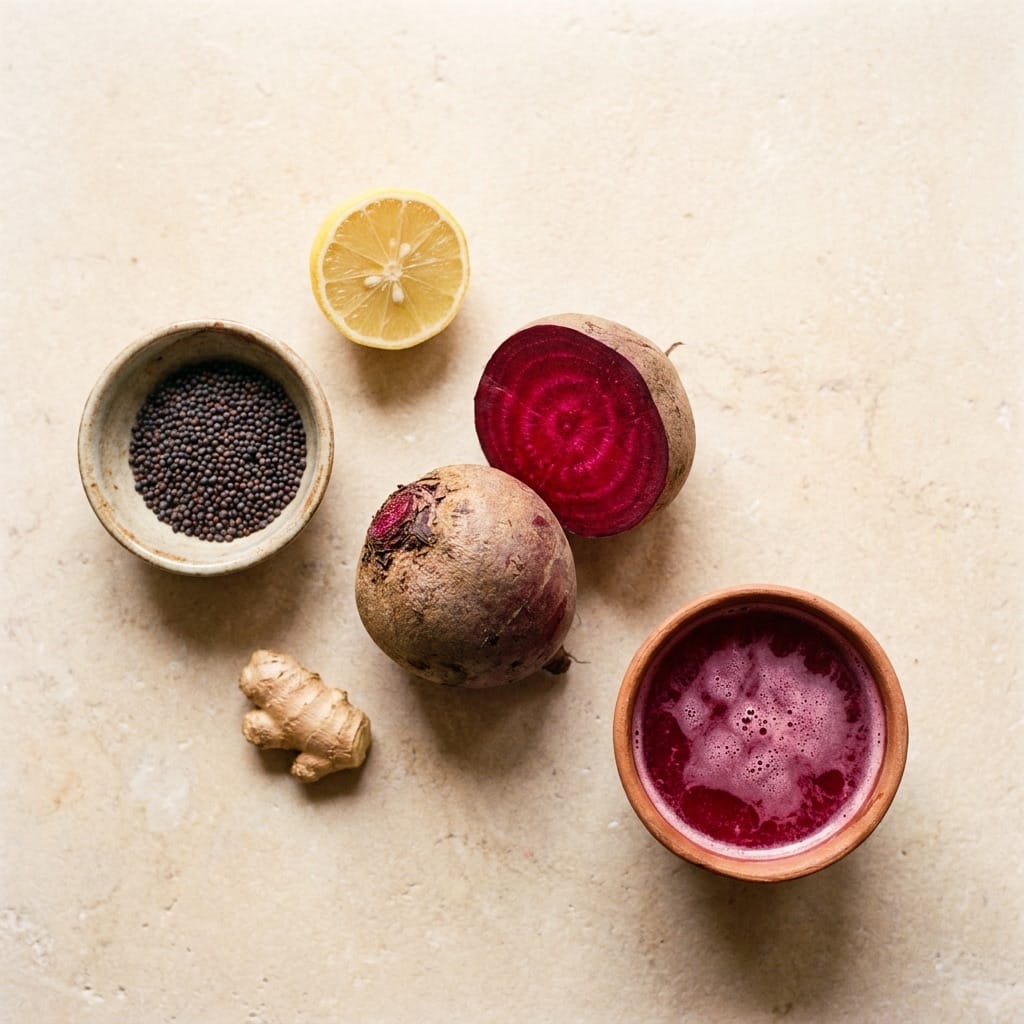
The Chain
- You drink beetroot juice. It contains roughly 250 mg of dietary nitrates.
- Bacteria on your tongue convert nitrates → nitrites. This step is why mouthwash right after a beet shot is counterproductive — it kills the bacteria doing the work.
- Your stomach converts nitrites → nitric oxide (NO). A short-lived signalling molecule.
- Nitric oxide relaxes the smooth muscle around blood vessels. Vessels widen slightly; blood pressure drops a touch; oxygen delivery improves.
- In practical terms: lower resting blood pressure, slight endurance improvement during sustained efforts (cycling, running, climbing stairs), better recovery.
How Big Is The Effect
The research is remarkably consistent. A single 500 ml dose of beetroot juice produces a 4–5 mmHg drop in systolic blood pressure within 3–6 hours, lasting roughly 24 hours. For endurance exercise, studies find 1–3% improvement in time-trial performance over 4–16 km. That's modest for an elite athlete and meaningful for an amateur.
Who It's Not For
- Anyone already hypotensive. A 4 mmHg drop on top of an already-low BP is the wrong direction.
- Anyone on BP medication. Not dangerous in most cases, but worth telling your doctor so dosing accounts for it.
- People with a history of oxalate kidney stones. Beets are high-oxalate.
Why We Bother Explaining This
Because “beetroot is healthy” is lazy. Beetroot is a specific tool for a specific job — stable BP, sustained endurance, circulation — and knowing the mechanism means you can decide whether that tool fits your life.